Why Keepsake Boxes Turn Ordinary Objects into Memory
Keepsake boxes turn ordinary objects into memory by grouping them into a story, helping you notice the people, places and small rituals each one carries.
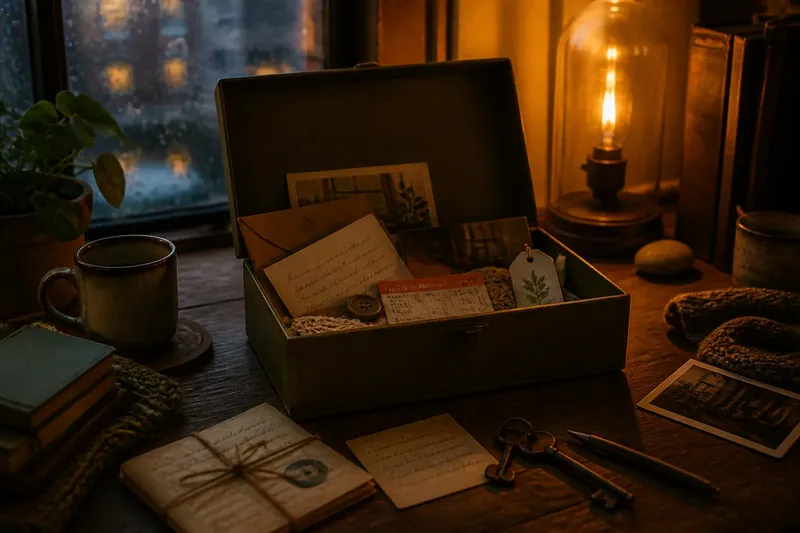
Why do keepsake boxes turn ordinary objects into memory? A bus ticket, a cracked button or a folded note can seem unremarkable on its own; gathered beside other objects, each begins to tell you what mattered. The box is not simply a container. It is a small act of editing, shaped by what you choose to keep together.
Choose a thread
Start with a question rather than a container full of everything. You might be curious about a friendship, a move between homes, a shared meal or the daily routines of someone you miss. A clear thread gives objects a reason to sit beside one another without forcing them into a grand story.
Try this prompt: What would I want to remember about this part of my life if I had only a handful of objects? The answer could be a mood or habit, not a milestone. A collection about evenings spent learning to cook may say more about patience and company than a box labelled with a date.
Say you are making a box about settling into a new flat. You select the handwritten note with the keys, a takeaway menu from the first week and a small plant label from a pot you carried over. Together, they may bring back the awkward beginnings and the routines that gradually made the place feel familiar.
Notice the ordinary
Meaning often hides in objects you used without ceremony. A tea-stained recipe card may recall who called out the next ingredient; a worn library slip may bring back a quiet journey home. Ask what the object helped you do, who was nearby and what happened just before or after you touched it.
Useful prompts include:
- Where did this object usually live?
- Who handled it, borrowed it or pointed it out?
- What sound, smell or phrase comes back with it?
- Was it part of a routine, a surprise or a change?
- What do I remember differently now than I did then?
These questions make room for uncertainty. You do not need a polished account. “This was always beside the kettle” can be a meaningful note because it places an object within the ordinary movement of a home.
Group by relationship
Chronology is one way to arrange a box, but it is not the only one. Objects can be grouped by the people who shared them, the place they travelled through or the actions they invite you to remember. A spare key and a note about feeding a neighbour’s cat may belong together because both speak of trust, even if they come from different years.
Lay the objects on a table before packing them away. Notice which items seem to answer one another. A recipe, a shopping list and a chipped wooden spoon might form a cluster around a familiar meal. A single object may belong in more than one story; choose the grouping that feels most revealing now, and allow your interpretation to change later.
Leave room for gaps
A keepsake box is not a complete record, and it does not need to be. What remains may reflect what was easy to save, what someone else kept or what you recognised as meaningful only later. A gap can be part of the story: perhaps a person is present through a phrase they used, though no object associated with them survived.
When you cannot recall a detail, mark the uncertainty rather than filling it in. A small slip of paper might read, “I think this came from the market, but I’m not sure.” That honest boundary helps distinguish memory from guesswork and leaves space for another family member to add what they know.
Add a voice
Objects cannot explain themselves, so a brief caption can keep a personal association from fading. Write on a separate card rather than directly on a fragile keepsake. Include the plain facts you know, then add one detail that gives the object its place in your story: “Blue ticket stub; we took the late bus after the school concert; I remember Mum humming on the way home.”
Keep captions conversational. A few words in your own voice may carry more than a formal description. If another person remembers the object differently, you can preserve both accounts. Shared memory is often made of overlapping versions, not a single authorised explanation.
Choose a useful container
The box should suit the objects and the way you expect to revisit them. A sturdy archival box can hold paper keepsakes; a tin or wooden box may suit less delicate items. Separate materials that could scratch, stain or snag one another with acid-free tissue or small envelopes. Keep the box somewhere dry and easy to reach, rather than treating it as a sealed vault.
For photographs or documents, avoid sticky tape and avoid writing on the original. If an item is delicate, valuable or potentially hazardous, ask a conservator or other qualified professional how to handle it. For everyday objects, the main aim is simple: keep them together without making the collection difficult to open and enjoy.
Questions about keepsake boxes?
What should go in a keepsake box?
Choose objects with a clear personal association, such as a note, recipe card, ticket or small tool from a familiar routine. A modest item can carry a strong memory if you can say what it connects to.
How do I decide what to keep?
Ask whether the object adds a distinct part of the story or repeats what another item already says. If you are unsure, make a note of the memory first and decide later whether the object itself needs to stay.
How can I include someone else’s memories?
Invite them to describe what they remember, without asking them to settle every detail. Keep their words separate from your own account so the box can hold more than one perspective.
How often should I revisit the box?
There is no required schedule; open it when you have a reason to remember, add context or share an object with someone. Revisiting can also show that an item’s meaning has shifted, which is part of its story rather than a problem to fix.
Let the story change
A collection does not need to be finished before it becomes meaningful. You might remove an item that no longer belongs, add a note after hearing a relative’s recollection or start a second box for a different thread. The contents can change as your understanding does.
That is why keepsake boxes turn ordinary objects into memory: they make relationships visible without insisting that every object has one fixed meaning. When you next open yours, choose one item and write down the person, place or habit it brings to mind. That small act can give the object a clearer place in the story you are still learning to tell.