The Souvenir That Claims to Tell a Whole Place
A souvenir can suggest a whole place without representing it. Learn what to ask about its maker, meaning and omissions before treating it as a cultural portrait.
What can one souvenir really tell you about a place? A souvenir of a place can offer a vivid clue, but it cannot stand in for everyone who lives there. The useful question is not whether the object is “authentic”; it is whose account it carries, and what falls beyond its frame.
A shop-window portrait
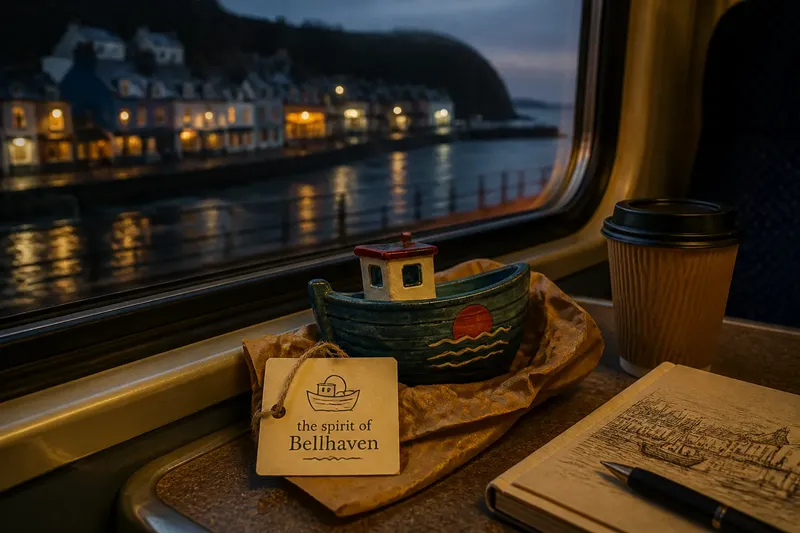
Imagine you are visiting the invented coastal town of Bellhaven. In a station shop, you see a small blue ceramic boat with a painted red sun. A card calls it “the spirit of Bellhaven”, and you buy it for a friend. The object is attractive and easy to pack. The trouble begins when its confident label starts to feel like a complete explanation.
On the train home, you describe Bellhaven as a place shaped by fishing and bright coastal colours. That may be a reasonable first impression, but the boat alone cannot tell you whether fishing defines the town now, whether residents share the same view of it, or whether the red sun means anything beyond a pleasing design. A souvenir compresses a place into something portable. Compression is useful; it is also selective.
This is not a reason to dismiss tourist objects as false. A shop item can be made with care, enjoyed by local people and connected to a real craft tradition. Nor does a single object need to explain a whole community. The mistake is asking it to do so, then treating the missing details as if they do not exist.
Follow the object’s route
Start with what you can see. Is the boat hand-shaped or moulded? Does the shop name a maker, workshop or material? Is its label specific about what the image represents, or does it use sweeping language such as “the spirit” or “the essence”? These clues tell you something about how the object is presented. They do not, by themselves, settle its cultural meaning.
Next, notice the route from maker to buyer. A locally made piece sold through a workshop may have a different relationship to place from a mass-produced item printed with a town name. Yet “locally made” still does not mean “speaks for everyone”. It identifies a production connection, not a community-wide endorsement.
If you can, look beyond the souvenir shop. A museum display, a craft studio’s own description or a local cultural organisation may provide useful context. Listen for whether an explanation names a particular maker, family practice or neighbourhood rather than treating the town as one voice. If different sources describe the same image differently, that disagreement is information, not a puzzle you must force into one answer.
Ask what is missing
A good reading of an object keeps its limits in view. Ask who chose the image and who benefits from its sale. Ask whether the object presents a current practice, a remembered past or a visitor-friendly shorthand. Then ask what subjects remain outside the design: work that is not picturesque, communities not represented by the dominant tourist story, or everyday life that does not fit on a label.
These questions do not require you to investigate every purchase. They simply stop an attractive souvenir from becoming your only evidence. You might describe the Bellhaven boat as a ceramic souvenir sold in the station shop, with a red sun and a label linking it to the town. That account is modest, but it preserves what you actually know while leaving room to learn more.
Be careful, too, about treating a familiar symbol as self-explanatory. A boat may suggest work, travel, leisure or a stylised local identity, depending on who made it and who is looking. The same image can carry several meanings, or none that its maker intended beyond decoration. Letting those possibilities remain open is a form of cultural curiosity, not a failure to interpret.
When does a souvenir represent a place?
Does “locally made” mean culturally representative?
No. It tells you something about where an object was produced, but not whether its design reflects a shared view. Ask who made it and how they describe the work.
Can a souvenir still be meaningful if it is mass-produced?
Yes. It can be a useful reminder of a visit or part of how a place presents itself to visitors. Its meaning as a keepsake does not make it a full portrait of local life.
How can I learn more about a souvenir’s imagery?
Check the maker’s label or shop information, then look for a local museum, workshop or cultural organisation that discusses the image. If explanations differ, note the difference instead of choosing the neatest story.
What should I say when someone asks what the object means?
Separate what you know from what you infer: name the material, image and source of any explanation you have. You can say that it suggests a connection to the place without claiming it represents everyone there.
A more careful account
Back in the invented Bellhaven situation, imagine you find a card beside the boat that names its ceramic workshop and says the red sun is the maker’s personal design, not a traditional town emblem. You revise what you tell your friend: the boat is a souvenir made by a Bellhaven workshop, and its label links it to the coast, but its image belongs to that maker’s interpretation. The observable result is a more precise description, not a final account of the town.
That small change matters. It gives the maker a place in the story, keeps a sales phrase from becoming a cultural fact, and makes the object easier to discuss honestly. If your friend wants a broader picture, the souvenir can be a starting point: a prompt to look at other voices and forms of local life, rather than a substitute for them.
A souvenir can travel farther than the context that gave it meaning. When you pass one on, include the little you know about who made it and how it was described. That detail helps the next person enjoy the object without asking it to speak for a whole place.